
What to Consider When Packing Industrial Equipment
Key considerations for protecting machinery and industrial equipment during handling, storage, and transportation.
Introduction
Industrial equipment is often heavy, valuable, and sensitive to impact or moisture. Packing it properly helps protect the equipment and makes handling safer for everyone involved.
A good packing plan considers the equipment itself as well as how it will be moved and stored.
Understand the Equipment
Start by reviewing the dimensions, weight, center of gravity, and lifting points of the equipment.
Some parts may be fragile, protruding, or sensitive to vibration. These details help determine the packaging structure and the internal supports that will be needed.
Choose the Right Base
Heavy equipment usually needs a strong base such as a wooden skid or heavy-duty pallet.
The base should distribute weight evenly and allow safe lifting by forklift or crane.
Best suited for: Machinery and equipment that will be lifted, moved, or stacked during transportation.
Secure the Equipment Inside
Blocking, bracing, and bolting help keep the equipment from shifting inside the packaging.
Loose parts should be removed, labeled, and packed separately where possible.
Protect Against Moisture
For sea freight or long storage, moisture can cause corrosion.
Vacuum aluminium foil, VCI materials, and silica gel can be used to create a protective barrier around sensitive equipment.
Plan for Handling and Transport
Mark lifting points, center of gravity, and handling instructions clearly on the packaging.
Consider how the packed equipment will be loaded, secured, and unloaded at its destination.
How PMI Can Help
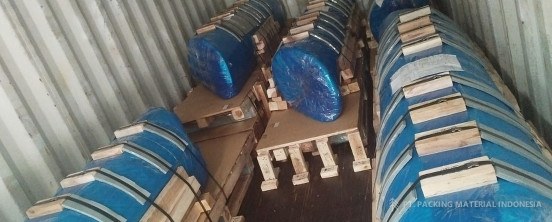
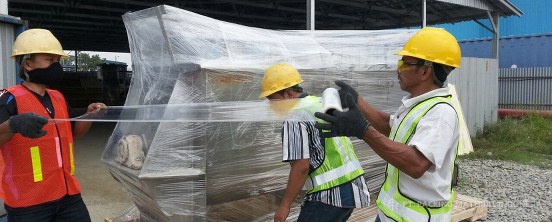
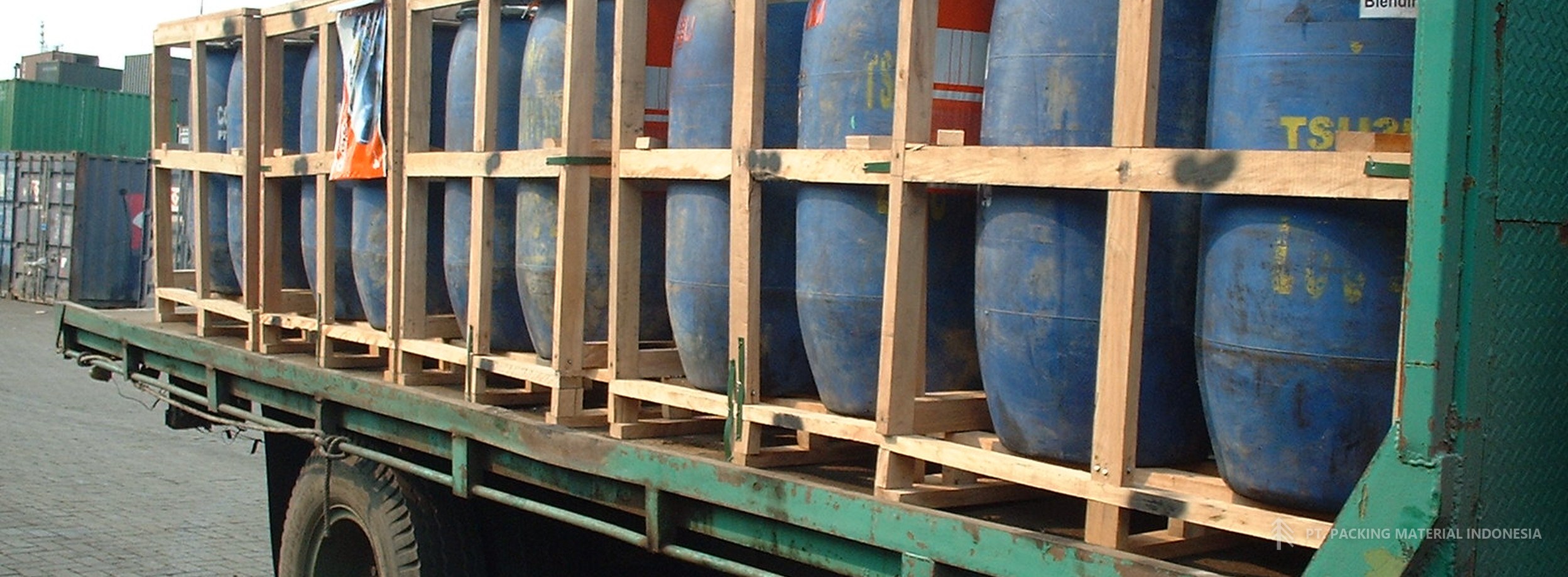
PMI provides industrial packing services for machinery and equipment, from skids and crates to vacuum foil and cargo securing.
Our team can support the process from packing to loading.